Binary Options for Beginners
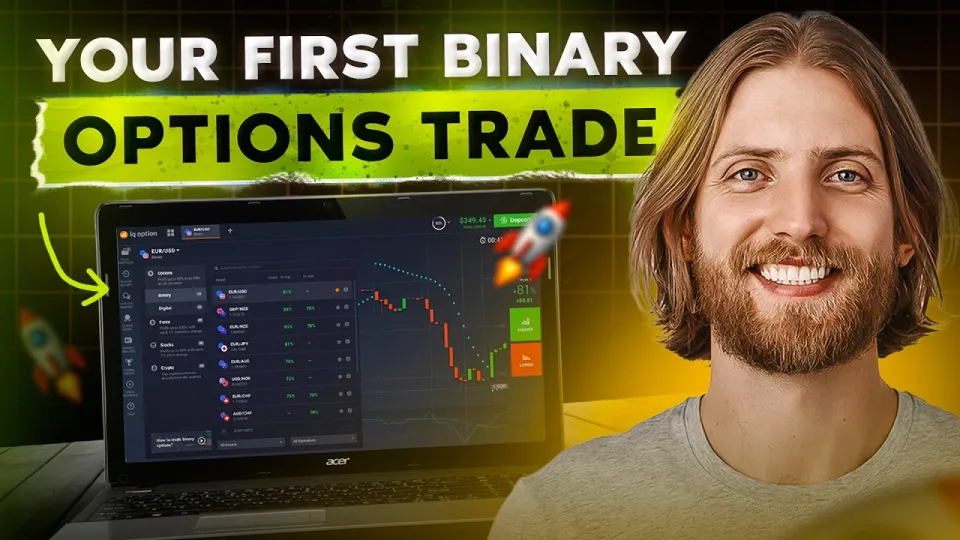
Video: Binary Options | Binary Options Tutorial for Beginners | Where Should You Start?
· based on the channel Binary options tutorial for beginners
Binary options are fixed-stake contracts where you predict whether an asset's price will be above or below a chosen level at a set expiry time; if you are right you receive a fixed payout, and if you are wrong you lose the stake. Starting out means picking a regulated platform such as Quotex, learning the contract mechanics on a demo account, and capping risk at 1–2% of your balance per trade before putting real money in.
What a binary option actually is
A binary option is a yes-or-no bet on price direction with a fixed expiry, which is why it is also called a digital option. You choose an asset (currency pairs, gold, indices, crypto or stocks), a strike price, a direction (higher or lower) and an expiry time; the platform then quotes a payout percentage for that contract.
Three numbers define every trade:
- Stake — the amount you put at risk, fixed before entry.
- Payout — the percentage returned on a winning trade, typically 70–95% on the major platforms.
- Expiry — from a few seconds on turbo contracts to a day or more on long-term options.
The payout asymmetry is the core mechanic. At an 80% payout you win $8 on a $10 stake but lose the full $10 on a miss, so you need a win rate above roughly 56% just to break even. That single figure explains why discipline matters more than any indicator.
Binary options tutorial for beginners: a step-by-step start
Start on a demo account, define a written plan, and only then deposit a small amount you can afford to lose entirely. A practical order of operations looks like this:
- Register and verify on one platform rather than three — Quotex, Pocket Option and Binarium all offer a demo mode, and splitting attention across accounts slows learning.
- Learn the interface: where the strike line sits, how the payout changes with expiry length, and how the countdown behaves near expiry.
- Pick one asset and one expiry — for example EUR/USD on 5-minute contracts — and stay there for at least a few dozen demo trades.
- Write a plan: entry rule, stake size, maximum trades per session, daily loss limit.
- Trade the demo for 2–4 weeks and log every result; only move to real money once the log shows a positive expectancy.
- Deposit small and keep the same stake size you used in the demo, not a larger one.
Risk rules that keep a beginner account alive
The most common cause of a blown account is not a bad strategy but oversized stakes and revenge trading after a loss. Three rules do most of the work:
- Stake 1–2% per trade. With a $200 balance that is $2–$4, which gives you dozens of attempts to learn on.
- Set a daily loss limit (for example 5% of the balance) and stop when you hit it, regardless of how the last trade felt.
- Avoid martingale doubling. Doubling after each loss can wipe an account in a handful of trades, because a losing streak of five or six is statistically normal even with a decent edge.
Also treat short expiries with caution: a 30-second contract is mostly noise, while 5–15 minute expiries on liquid pairs give chart analysis something to work with. News releases — central bank decisions, CPI prints, NFP — can spike price through the strike line in seconds, so many beginners simply avoid trading through them.
How to read a chart before placing a trade
A beginner needs only a few tools: support and resistance levels, a trend check, and one momentum indicator. Before entering, answer three questions:
- Is price trending, ranging, or compressing before a breakout?
- Where is the nearest level that price has repeatedly respected?
- Is there enough time left in the expiry for the move to reach the strike line?
Candlestick patterns — pin bars, engulfing candles, doji at a level — are useful mainly because they mark rejection or indecision around a level you already identified. No pattern is reliable in isolation, and no indicator predicts direction with certainty; they help you frame a probability, which is all a binary option trade is.
Platforms compared: Quotex, Pocket Option and Binarium
All three platforms follow the same contract model but differ in interface, asset list, minimum deposit and payout levels. Quotex is known for a clean chart-first layout and a low entry threshold; Pocket Option offers a broad asset list, social trading features and account currency options; Binarium is oriented toward a simple, beginner-friendly flow with a range of expiries. Payouts on all three move with the asset and expiry, so compare the quoted percentage on the exact contract you intend to trade rather than the headline figure on the landing page.
Before depositing, check which regulator, if any, supervises the broker in your jurisdiction, what the withdrawal terms and minimums are, and whether verification is required. A demo account is free everywhere, so there is no reason to fund an account before you have tested the platform's execution and withdrawal process.
Typical beginner questions and doubts
Newcomers most often ask whether binary options are gambling, how much money is needed to start, and why the payout is below 100%. The honest answers: the fixed-payout structure makes outcome variance high, so position sizing is the real skill; you can start with a small deposit and a $1–$5 stake on most platforms; and the payout below 100% is the platform's built-in margin, which is why a high win rate is still required to profit. Another recurring doubt is whether a strategy can be copied from a video — it can be studied, but it has to be tested on a demo account with your own log of results before it means anything.
Platform links and tools from the breakdown
- Quotex registration: https://dakaklik.com/_quotex?creative_id=WzzpYsjS3ps
- Pocket Option registration: https://dakaklik.com/_PocketOption?creative_id=WzzpYsjS3ps
- Binarium registration: https://dakaklik.com/_Binarium?creative_id=WzzpYsjS3ps
- NordVPN: https://dakatop.link/Nord_us?creative_id=WzzpYsjS3ps
Conclusion
Binary options reward process discipline far more than prediction: fixed stakes of 1–2%, a written plan, a demo phase of several weeks and one platform mastered at a time will do more for a beginner than any indicator. The video breakdown by the channel Binary options tutorial for beginners walks through the same starting sequence, from platform choice to the first trades, and is a reasonable companion to this guide. If you are ready to open an account and test the mechanics yourself, start with Quotex registration and keep the first deposit small.
Key takeaways
- A binary option is a fixed-stake contract that pays a set percentage if the price finishes on the chosen side of the strike at expiry, and returns nothing otherwise.
- Typical payouts on Quotex, Pocket Option and Binarium sit in the 70–95% range, so a single loss can erase the profit of several wins.
- The usual beginner rule is to risk no more than 1–2% of the account balance on one trade.
- Most platforms offer a free demo account with virtual funds before any deposit is required.
- Expiry times range from around 5 seconds on turbo contracts to a day or more on long-term options.
Questions & answers
How much money do I need to start trading binary options?
Most platforms allow a first deposit of around $10–$50 and stakes from $1. A workable starting balance is one where a 1–2% stake is still meaningful, so $100–$200 lets you take dozens of small trades without risking the account on a single outcome. Never fund an account with money you cannot afford to lose entirely.
Are binary options gambling or trading?
They sit between the two. The contract is a genuine market instrument tied to real price movement, but the fixed payout below 100% and the all-or-nothing outcome create high variance. Skill in reading charts and sizing positions improves the odds, yet no strategy removes the risk of a losing streak.
Why is the payout only 70–95% and not 100%?
The gap between the payout and the full stake is the platform's margin, built into every contract. Because a loss costs the entire stake while a win returns only the payout percentage, you need a win rate above roughly 55–58% at typical payouts just to break even.
Should I trade on a demo account first?
Yes. Every major platform offers a free demo with virtual funds, and it is the only cost-free way to learn the interface, test an entry rule and build a log of results. A common approach is 2–4 weeks of demo trading with a fixed stake size before depositing real money.
Source: Binary Options | Binary Options Tutorial for Beginners | Where Should You Start? · Markdown version